
Dark Skies Gorge – August Update
Hi, everyone, and happy August new moon. Officially it was this past Saturday (8/23), but the night sky is still very dark and the temperatures are warm, so now is a great time for some stargazing.
This month, let’s take a look at the Sky Quality Meters (SQMs) that Mike McKeag is helping to install and operate all around Oregon – and especially what happens when SQMs meet wildfires!
Let’s also look at how Pittsburgh is improving its street lights, plus some scientific data about light pollution and songbirds. And of course some gorgeous photos of our night sky and beyond.
SQMs ARE HOT – SOMETIMES LITERALLY:
Sky Quality Meters (SQMs)
An SQM is a fancy recording device – about the size of a can of tennis balls – that measures and records the brightness of the night sky directly overhead at 5-minute intervals nightly. Here’s what SQMs look like when installed.
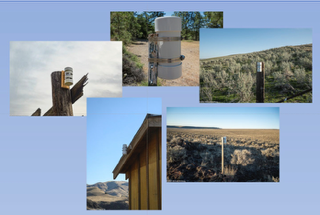
With the help of 40+ volunteers and organizations, there are 75 SQMs operating around Oregon, and our own Mike McKeag has been an important part of making that happen. A number of these 75 SQMs are close by – including 10 in the National Scenic Area.
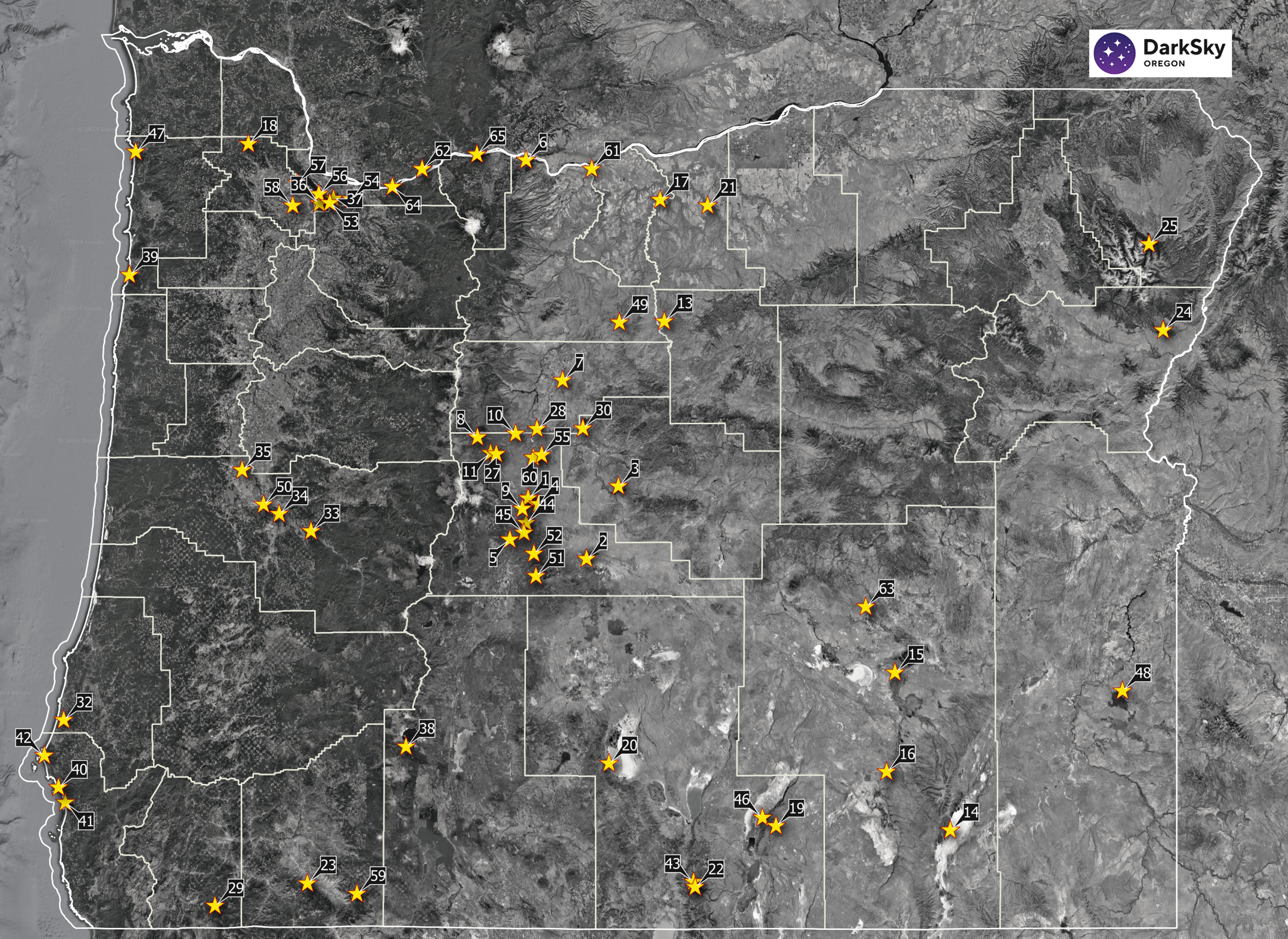
“Milky Way Visibility”
So far these Oregon SQMs have taken over 15 million measurements of our night skies. Using these data, Mike and his colleagues at DarkSky Oregon developed an innovative index of Milky Way Visibility. This compares the brightness of the Milky Way to the brightness of the rest of the night sky, and it shows that Antelope, Oregon has the most visible Milky Way of all 75 sites. In last month’s update, we mentioned that Antelope bills itself as “Where you can see the Milky Way from Main Street’, and this proves that it’s true. On the other hand, in Portland the Milky Way isn’t visible at all from any of their four SQM sites. Sad for our friends in Portland, no?
SQMs vs. Wildfires – A Fair Fight?
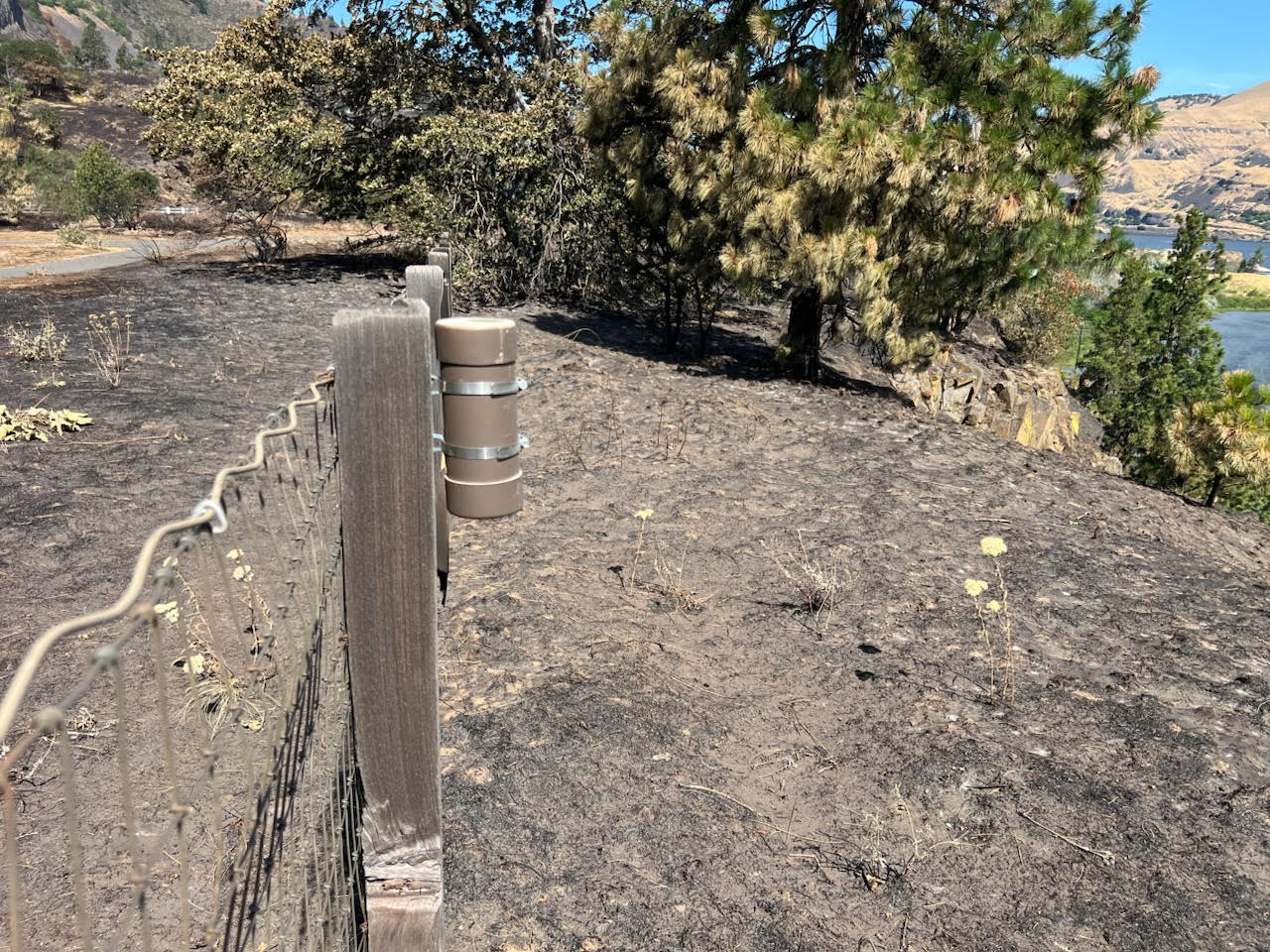
But we recently had some wildfires in Oregon, and two of the SQMs were in the fires' paths. As you can see below, the SQM at the Discovery Center in The Dalles fared pretty well during the Rowena fire. The surrounding vegetation was pretty scorched, but the SQM itself wasn’t harmed. Amazing.
Unfortunately, the SQM at Cottonwood Canyon State Park wasn’t so lucky. The Ferry Fire’s temperature shot beyond 145 degrees Celsius, which equals 293 degrees Fahrenheit. In other words, damn hot, and you can see what it did to the SQM.
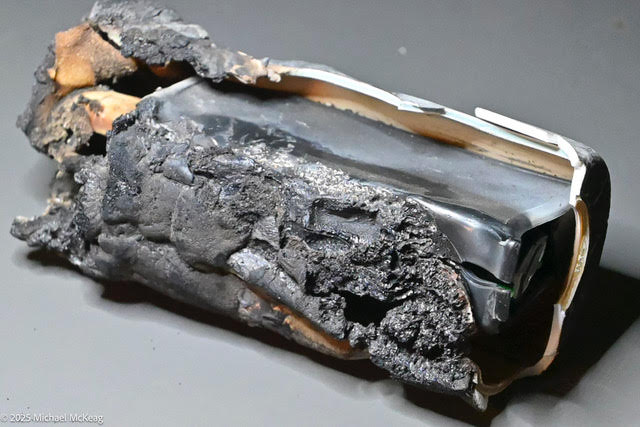
This SQM looks to be ruined, but miraculously, it still worked. Mike McKeag cut away the housing, unhooked the battery pack, and sent what Mike called “the remains of the meter” to the manufacturer, the Unihedron company in Ontario, Canada.
Amazingly, they were able to download the Dark Sky data, including the exact moment the fire came through and how dark the sky became because of the smoke. Cottonwood Canyon State Park may use the remains of the SQM (and a plot of the data) as part of a possible exhibit on wildfire resiliency.
These SQMs in Oregon are truly amazing devices, and they give us valuable Dark Sky information each and every night. If you want to learn more about them, here’s the annual report from this past January:
https://www.darkskyoregon.org/s/DarkSky_Oregon_SQM_Network_TechnicalReport_Edition_09_v3_cmpress.pdf.
ON THE OTHER SIDE OF THE COUNTRY….
Here’s a 2-minute TV news story about the changes Pittsburgh, Pennsylvania is making to its street lights. The city is replacing all its old-style street lights with new ones that explicitly fit Dark Skies criteria. The new lights will be better for humans and critters, plus they’ll save the city money in maintenance and electricity.
https://youtu.be/kGe-CeM8Kh0?si=BEPqcQp6SsvbxMGU
One exciting aspect of these new streetlights is that they can be dimmed to whatever brightness is needed – even on a neighborhood-to-neighborhood basis. Some Dark Skies Gorge members in Hood River have wondered if they could have dimmer street lights in their neighborhood, and maybe this could be one solution?
LIGHT POLLUTION IS MAKING BIRDS SING LONGER
Two biology professors have found that light pollution is making birds sing longer each day. They analyzed 61 million recorded vocalizations from 580 bird species and found that, on average, light-affected birds are singing an average of 50 minutes longer – they start singing 18 minutes earlier in the morning and stop singing 32 minutes later in the evening.
The authors wonder if this prolonged activity may affect birds’ ability to survive and reproduce. For example, 50 minutes of additional activity a day may lead to less time to rest or to a need to find more food. “If the extended day is resulting in sleep debt, and it often does for humans, then we might expect adverse health or population outcomes, further exacerbating the long-term decline of bird populations across the globe”.
Their findings were published last Thursday in the journal Science, and the authors said that “Light pollution is a growing concern for human and wildlife health, with current estimates of 80% of the world and more than 99% of U.S. and European populations living under light-polluted skies”.
AND NOW FOR SOME GORGEOUS NIGHT PHOTOS
Our thanks to Bill Kowalik, Board Chair of DarkSky Oregon, for sending us this link to the winners of DarkSky International’s 2025 Capture the Dark photography contest. If you want to see some absolutely gorgeous photos of the night sky, here they are:
https://darksky.org/what-we-do/events/photo-contest/2025-winners/
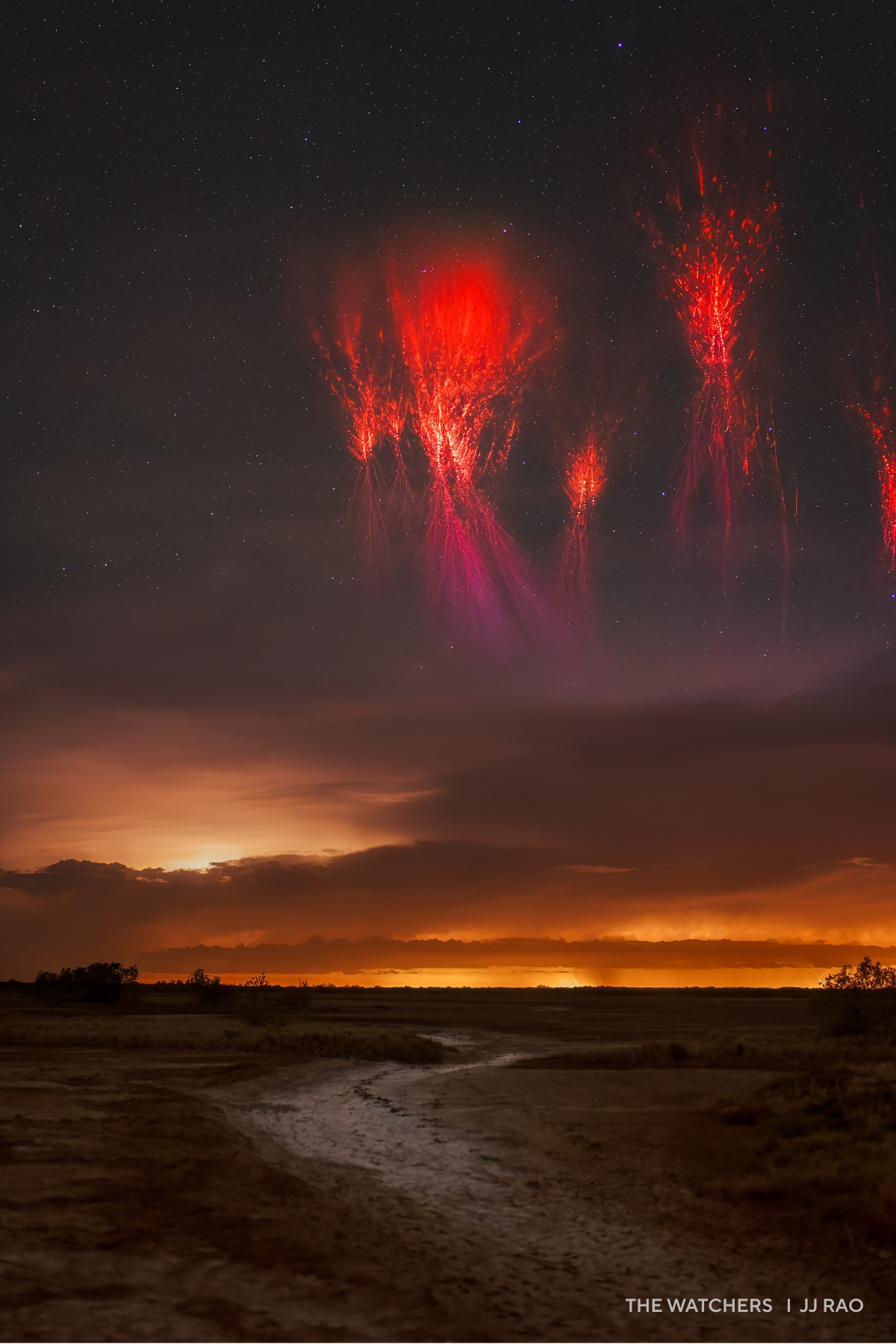
And here’s the first place winning photo, titled “The Watchers”. The photographer, J.J. Rao, describes the photo this way: “Rare red sprites dancing over the tidal flats of Western Australia. A large sprite like this exists for 10 milliseconds, up to 40x faster than an eye blink. This makes photographing them challenging and requires very dark skies. The central sprite is quite unusual. It’s known as a ‘jellyfish’ sprite, the largest and fastest of all sprites.”
Enjoy these photos – and our dark skies – and remember, let’s keep ourselves in the dark.
Best, Mike Hendricks, Hood River
Mike McKeag, Mosier